The problem.
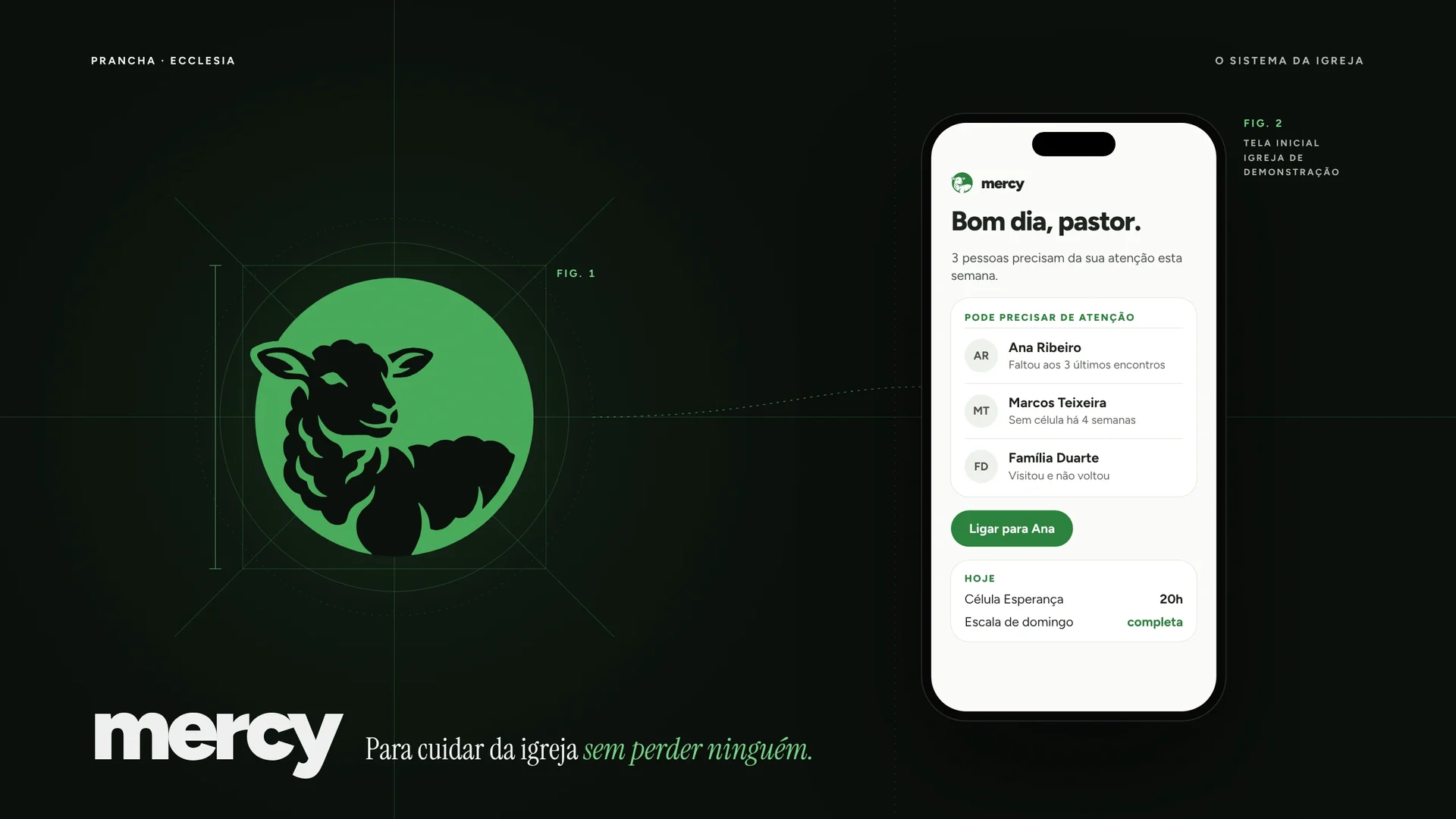
Running a church means living between spreadsheets, group chats, the treasurer’s notebook and the pastor’s memory. Each one works alone and none of them talk to each other. The cost shows up slowly: someone misses three Sundays, a prayer request goes unanswered, a guest comes back twice and nobody reaches out.
The church software that existed handled records and money, but looked like a spreadsheet with a logo. It never told the pastor what to do on Monday. That is where Mercy came from: church management software that watches what already happens in the church and speaks up when someone needs attention.
What Mercy does.
Everything in one place, from Sunday to closing the month:
- 01People and guests
Member records with history, and a heads-up when someone drifts away or a guest is not welcomed.
- 02Small groups
The leader sends the report in a minute, with attendance, guests and prayer requests.
- 03Services
Check-in at the door or on the leaders’ phones, with team, worship and sermon ready.
- 04Giving
Every gift recorded with the giver’s name, ready for the giving receipt.
- 05Kids
Check-in and check-out with a code, rooms and kiosk.
- 06Bible
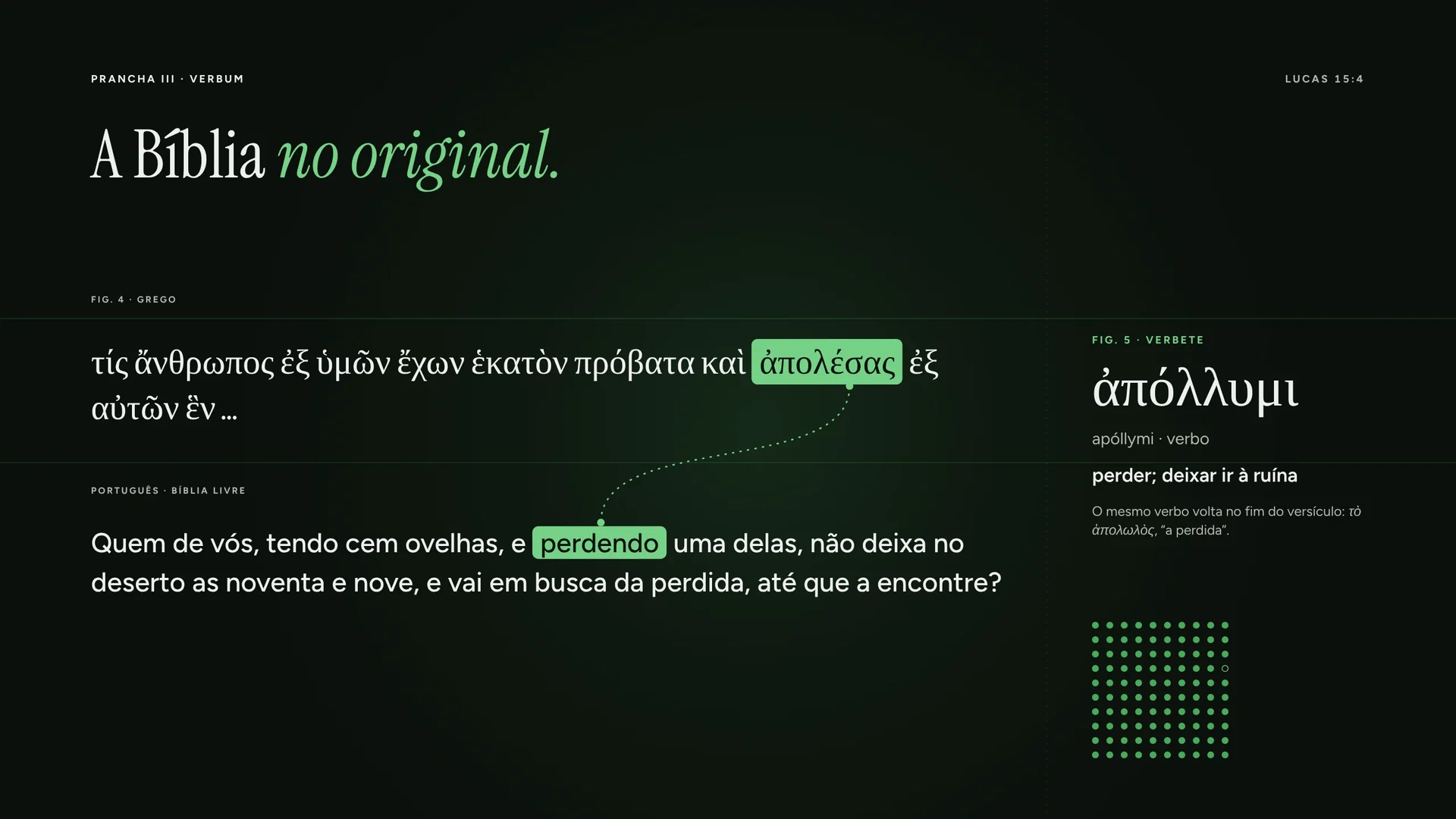
Every word linked to the Greek and Hebrew, with a lexicon and study notes.
The church week.
Mercy is built around the real week of a church, not a menu of features. On Sunday the church arrives and check-in happens. On Monday the pastor opens the app and sees who needs attention and why, with no scores or risk charts: just what happened. On Wednesday the small group reports. On Friday the books close.
The Bible in the original.
Most people who preach every week never had time to study Greek and Hebrew. In Mercy, each word of the English text is linked to the original word, with a lexicon and a study note. Tap the word and it opens.
Sermons and series, notes and a Bible atlas with maps, a timeline and archaeological finds come with it. For people who only want the Bible, there is also the Mercy Bible app.
Free to start.
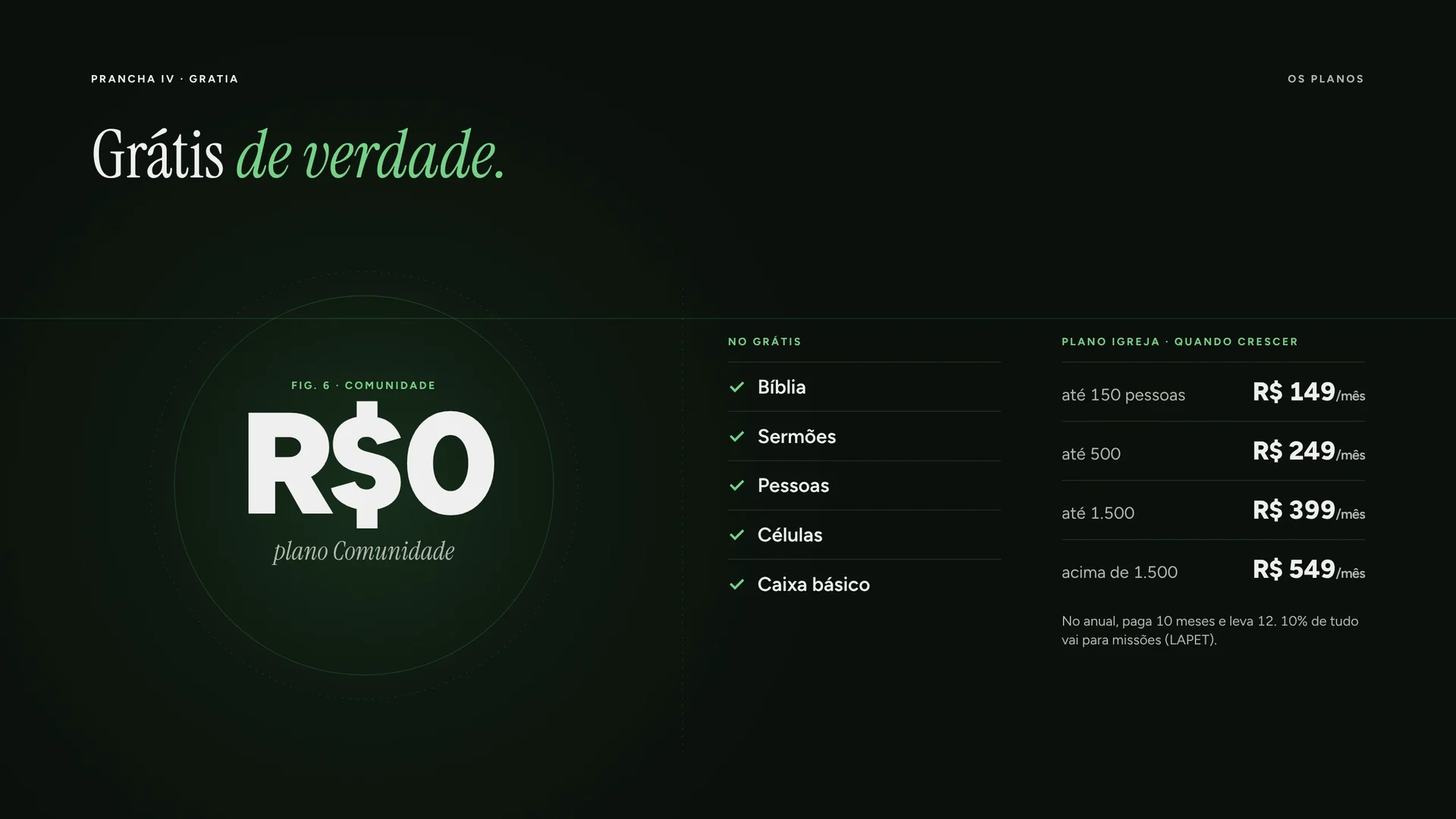
Mercy has a free plan with no card and no time limit, and a church is ready in about two minutes. Paid plans add the rest and follow the size of the church. Current pricing is on joinmercy.com.
Why an agency built software.
Eibenhaus does brand, websites and ads. Mercy put all three into one product. The name and symbol come from the parable of the lost sheep: the shepherd who leaves the ninety-nine to go after one. The brand speaks quietly, because a system that handles money, members and prayer requests cannot shout.
The interface was designed alongside the brand, not after it, so whoever arrives through the site recognizes the screen they will use. The full identity story is in the Mercy case.
Who uses it.
Convergence church in Blumenau, Brazil, uses Mercy every week to care for people, small groups and the books.
Mercy runs in English and Portuguese, for churches in the United States and Brazil. To try it, start your church free at joinmercy.com.

We knew everyone’s name. What we were missing was noticing in time who was drifting away.
Frequently asked.
Is there free church management software?
Yes. Mercy has a free plan with no card and no time limit.
Does Mercy track giving?
Yes. Every gift is recorded with the giver’s name, ready for the giving receipt.
Who made Mercy?
Mercy was created by Eibenhaus, an agency from Blumenau, Brazil, which made the brand, the product and the website.